


“As a tattooer, making your practice more environmentally conscious is a moral investment, not a business one”
Lots of things were new to me when I started at my first tattoo studio. Having a commute, using a stencil printer, interacting with other artists, and paying rent were all adjustments I was more or less grateful to experience. For the first time, I was in a space where there was a seemingly endless supply of disposable razors, bib sheets, nitrile gloves, and tongue depressors at my fingertips, ready for replacement whenever I flipped my station to take a new client.
At first, I was grateful for the time and labour I saved by avoiding last minute trips to the drug store when I was running short on supplies. Plus, knowing that these materials were covered in my station rent made tracking my finances easier. With liberal access to cheap disposable supplies, my practice started to feel safer and more hygienic, at the expense of producing significantly more waste.
As someone raised with full awareness of the climate crisis, this shift in my work habits bothered me. My mother is a trash queen— not in a hoarder way, but in a “single use plastics become cat toys; recycling is cleaned before disposal in numerically assigned bins; plastic bags must be used, washed, and reused until they crumble” kind of way. Needless to say, I was raised in a home that not only gave a shit about waste management, but made sure that that shit had a second life fertilizing our vegetable garden.
My trash queen mother, which is a term of utmost endearment, was, however, a medical professional who could not follow such waste practices at work. Hospitals and medical facilities use vast quantities of single-use disposable plastics, which in turn produce tonnes of bio-hazardous waste, which then needs to be incinerated. According to the nonprofit Health Care Without Harm, as of 2021, the medical industry accounts for 4.4% of all global carbon emissions, and frontline workers “often see providing necessary healthcare and being environmentally friendly as an either/or choice” (BBC).
It’s the same for tattoo artists.

As the industry evolves higher standards of hygiene and safety, our studio spaces and artistic practices have become more like the medical practices which we have been asked to emulate. We now use nitrile gloves, powerful hospital grade cleaning supplies, and protect most of our supplies with barrier films, all of which were far from standard practice before the 80’s, and almost non-existent in the thousands of years before machine tattoos stepped onto the scene. Tattooing has made significant strides in becoming more respected as an art form, partly because our health practices have improved so much. Clients now expect a relatively high standard of cleanliness in order to feel safe (and to help justify their body modifications to their more conservative families).
There’s no arguing that these new standards of sterilization and contamination prevention have reduced the spread of blood borne pathogens and the overall risks of adverse reactions for clients and practitioners alike. However, the tattoo industry now creates significantly more waste in order to accommodate the legal and cultural demands for medical grade cleanliness. While our carbon footprint is easily dwarfed by that of our neighbours in medicine, the tattoo industry still attracts, at its core, the anarchists and community builders who strive to push against societal norms and do better work.
So how do we as tattoo artists approach this conflict between health/safety and environmental impact? And is experimenting with making our practices more eco-friendly really worth it for our clients, our livelihoods, and our communities?
For those of us who seek to reduce our ecological footprint without compromising on our clients’ health and safety, we have to navigate amongst (at least) three major obstacles:
money, education, and culture.
In terms of cost, single use plastics and disposable supplies are only getting cheaper (healthydebate. Speaking from personal experience, tattooing using as many compostable and eco-friendly tattoo supplies as possible costs me nearly three times more. Producers of eco-friendly materials are starting to emerge onto the market, but between manufacturing, shipping, and getting established in the industry, their products are still far from cheap. Plus, most clients care a lot more about the perceived safety of your practice and the designs themselves rather than the carbon footprint. That’s not to say clients don’t care; many certainly do. However, unless you greenwash your brand identity as an “eco-tattooer” and leverage that to pull in new clients, investing in environmentally conscious supplies is not a profitable endeavor. Especially as a self employed artist or small business owner, we usually need to prioritize curating our artistic brands, in order to build a steady clientele, before we can afford the luxury of reducing the carbon footprint of our practices. As a tattooer, making your practice more environmentally conscious is a moral investment, not a business one.
Second, to address the educational obstacle, tattooers are not actually medical professionals. We have neither the training, nor the means to accurately evaluate the clinical safety of each step within our practices. Instead, we depend on our respective certification or licensing systems to teach us what we need to know. In British Columbia, for example, one third of the government’s Guidelines for Body Modifications document details the expected methods for preparing and executing body modifications such as tattooing, but only a mere three sentences on the proper disposal of all non-sharp waste.
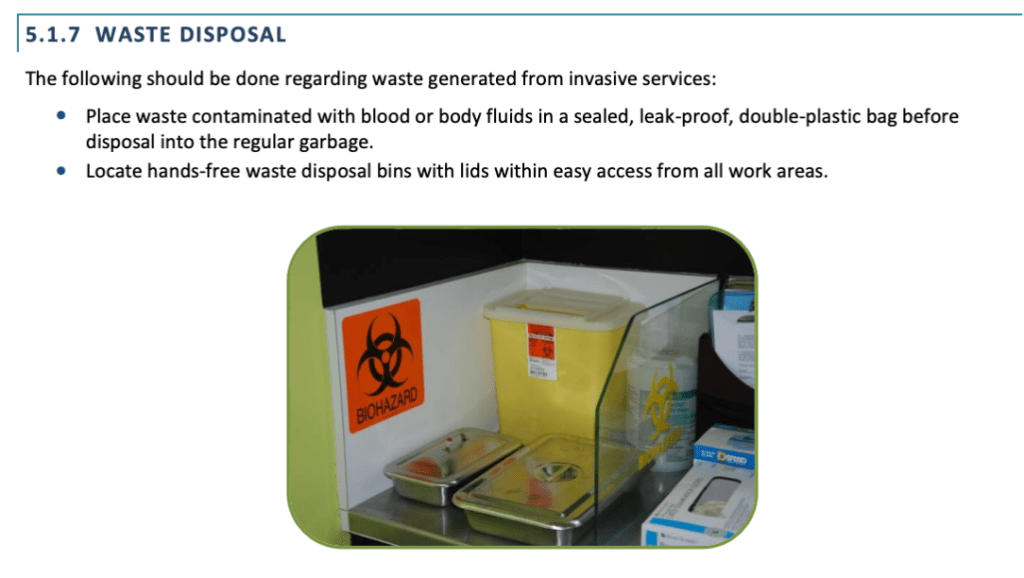
Considering the care and attention which we are expected to employ throughout the rest of our practices, waste disposal seems like an afterthought in our education.
Lastly, challenging the safety trends in the culture of our industry risks making both our peers and our clients uncomfortable with our practices. As artists, we’ve come a long way in gaining respect from the public and reputation within our community. Much of that comes from having a reliable, professional, and fundamentally safe tattoo practice which doesn’t position our clients as subjects in our experiments to identify and hover above the bare minimum standards for their health and safety. Plus, most people in this part of the world don’t stop at one tattoo or piercing, and tend to visit several different artists as they collect new work. Clients then observe and compare their artists’ practices, and develop a standard of expectation for what health and safety practices “should” look like.
For example, here in Vancouver, most studios I’ve visited use drape sheets to fully cover the table where clients sit for their tattoo. The table itself is consistently non-porous, wipeable, and sterilized with a medical grade cleaner before and after every client, whereas drapes sheets are a combination of non-sterile single-use plastic and non-wipeable paper that sometimes even sticks to the sweat and fluids on clients’ skin. Drape sheets are not required in BC’s Body Modification Guidelines, cost money, and can single-handedly occupy a third of my trash can after a tattoo session, so when I started tattooing, I didn’t use them. As clients started to either comment on their absence and I interacted with more artists in their studios, I learned that most folks in Vancouver expect them nevertheless, and so I adopted them into my own practice as well.
Even if the practices that clients come to expect are neither required by law nor prove genuinely effective in preventing adverse medical complications, artists can and will accommodate requests from clients expressing reasonable concerns over cleanliness. Whether you’re after a good tip, a returning client, or the simple yet intangible satisfaction of gaining someone’s trust, artists generally want their clients to feel comfortable with their practices. I certainly do, and since drape sheets are not the hill I plan to die on, I have accommodated for the expectation of their presence.
The industry is changing, however, and many of us still want to craft a personal practice that is mindful of our environmental impact, even if we don’t yet have the means to be perfectly carbon neutral. So what exactly are our options, and what are artists already doing to navigate this challenge?
Eco Tattooing Tips
(that don’t break the bank)
For those of us still fighting for the mental bandwidth to adapt our practices, I’ve started collecting some tips and tricks from folks I’ve met in my own tattoo journey. The following tips are evaluated for their safety, environmental impact, and financial cost, so that other tattooers can decide for themselves what are plausible choices for their practice.
Feel free to drop a comment if you or anyone you know has more accessible eco tattooing tips!
Tip No. 1:
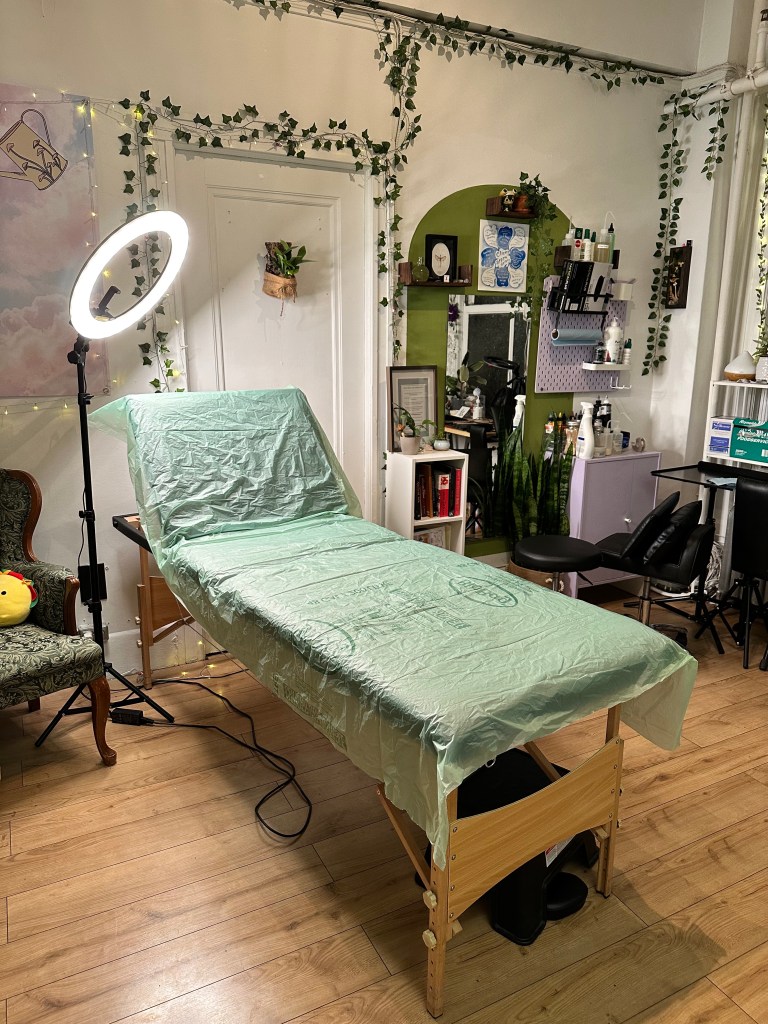
Replace drape sheets with compostable trash liners
Bib sheets, drape sheets, saran wrap– you name it. If you’re using a disposable plastic barrier, you can use compostable trash liners instead. They can be wiped down with BioText or Cavicide without corroding, and they fully break down with no toxic residues in industrial compost facilities. A medical drape sheet costs around 35 cents whereas an equivalent size trash liner runs 1.00$/bag (at GreenPaperProducts).
Hot tip from @buttercup.ttt, a queer tattooer in Aotearoa/New Zealand: cut them open to get twice as much coverage
Tip No. 2
Maximize stencil paper scraps
Most thermal transfer machines are surprisingly versatile and can print on good condition stencil paper scraps. Smartening up your stencil paper usage reduces waste and saves money at the same time.
To maximize a fresh sheet of stencil paper, cut and paste your printed design onto a blank piece of paper to easily adjust the placement of the design; then transfer each of your designs to the stencil starting from the bottom of the sheet, working to the top, so that the glue at the top of the sheet keeps the layers neatly aligned.
Tip No. 3:
Sort waste as you work
Having several different waste receptacles for paper recycling, plastic recycling, sharps, compostable, and non-compostable trash makes your trash collector’s job easier and more effective.

Tip No. 4:
Ship eco supplies with friends
Companies like Good Judy (CA), Greenhouse Tattoo Supply (UK), Eco Tattoo Supply (AUS), and True Tattoo Supply (US) carry eco friendly alternatives for supplies that are specific to tattooing like ink cups, cord covers, etc. To save on money and transport emissions, buy in bulk and/or split an order with other tattooers in your area.

Tip No. 5:
Repurpose expired inks
We are artists after all! Check out this painting using expired tattoo inks by my friend (and first ever station mate) Riley Yodogawa @roileyink
Tip No. 6:
Eat the rich
Don’t forget: 100 companies produce 71% of the worlds carbon emissions (Climate Accountability Institute, 2017). Pinning the blame and/or responsibility for the climate crisis on individuals and small businesses only serves as a distraction from holding the real perpetrators accountable. Switching from drape sheets to compostable trash liners is not going to prevent sea levels from rising, but it might help ease some anxieties you may feel about being forced to participate in the crumbling infrastructure of late stage capitalism. For me, it makes me feel like at least I did something ease the burdens on our environment (which is more than billionaires have ever done, that’s for sure).

At the end of the day, building eco friendly adjustments into your tattoo practice is a personal choice which depends on your financial abilities and emotional bandwidth. Personally, I think the best way to engage with the impact of our practices is to talk openly with our clients and our peers about how we want to see this industry change. Here’s some questions to get the ball rolling within your own tattoo communities:
Questions for tattoo artists:
- Where do you draw the line between reducing waste and maintaining a high standard of hygiene, cleanliness, and client safety in your practice?
- What do you do to make your practice more eco friendly, and what sacrifices have you had to make to do so?
- Do your clients notice or care about the environmental impact of your practice? How do you know?
- What questions do you wished researchers addressed on this topic?
- What needs to change first in order for the industry to reduce its carbon footprint: cost of supples, practitioner education, or client expectations?
Questions for tattoo getters:
- How important is the environmental sustainability of your tattooer’s practice?
- To what extent do you expect your artist(s) to research the environmental impact of their work?
- Which tattooers in your community are advocating for these changes? How are they doing it?
- Would you personally want to talk about eco friendly tattooing during your appointments?

 Andy Pollard