Readings & Resources

Handpoked Art, Research, and Musings
American History
Archeology
Archives & Collections
Colonization
Dermatology
Feminism & Gender Studies
Global Traditions
(by region)
Immunology
Law & Legislation
Mass Media
Methodology
Psychology
Queer Studies
Style Guides
Trauma Informed Tattooing
Western Religion
Trauma Informed & Therapeutic Tattooing
On This Page:
Trauma Informed Tattooing:
Trauma Informed Tattooing (TIT) is a concept coined by artist Tamara Santibanez.
Check out their resources here , including their Client Bill of Rights, online workshops, and books

Overview:
Trauma informed tattooing provides alternative approaches for those whose needs have not traditionally accommodated in tattoo spaces
At its core, trauma informed tattooing acknowledges that tattoos can be a triggering environment for those who have previously faced trauma related to their sense of bodily autonomy.
Trauma informed tattooing prioritizes:
- Informed Consent
- Client self-advocacy
- Accessibility of services
- Client comfort
- Privacy
- Mutual respect
Trauma informed tattooing seeks to dismantle problematic elements within the larger culture of western traditional parlour tattooing such as:
- Racism, misogyny, transphobia, homophobia, etc.
- The need to “prove your strength” by pushing clients’ abilities to tolerate unnecessarily
- Final decisions defaulting to the tattooer instead of client preferences
- Gatekeeping around the process of tattooing
TIT seeks to create a tattoo experience that is empowering and healing for clients, instead of harmful or triggering.
Trauma informed practices may include:
- Private tattoo studios or studio sections
- For clients who prefer not to be “on display” for other clients, artists, passers-by, or anyone else sharing the space.
- Pricing or rates that factor in extra time
- Clients may feel pressured to “power through” their pain and not ask for breaks in order to stick to an artist’s tight schedule
- Bodies are all different, and clients can feel shame for factors outside of their control that can make tattooing take more time (skin conditions, size/weight/age, nerve sensitivities or twitchiness, etc.)
- Offering distractions or entertainment options
- Providing stim or fidget toys for neurotypical clients who may have stim needs
- Clients may be more comfortable being in control of the music, conversation, or TV
- Encouraging clients to bring their own preferred distraction such as headphones, a book, knitting, etc
- Encouraging self-advocacy
- Offering multiple stencil sizes, placement options, design adjustments etc
- Encouraging rest breaks
- Respecting clients’ requests to change positions, work on different sections, or provide pain relief.
- Letting clients place their own stencil
- Providing clear appointment expectations
- Informing clients in advance of how long their tattoo is expected to take
- Describing one’s space and/or practice before the appointment
- Being transparent about one’s pricing policies before booking
- Being accessible after tattoo appointments
- Clients often have questions about aftercare or touch ups
- Expressing curiosity towards clients
- Creating a more meaningful relationship can help clients feel cared for and feel less like a canvas and more like a person
- Having open conversations about tattooing
- Encouraging clients to ask questions about style, science, and their artist’s approach helps create a culture of informed consent and combats informational gatekeeping
The Artists of Trauma-Informed Tattooing and Working Outside the Studio System
Article and Documentary featuring @koreanbein and @surfaceleveltats
Trauma informed tattooing operates on the assumption that it is possible that any client seeking a tattoo may have previously experienced undisclosed trauma. As such, trauma informed tattooing seeks to create an atmosphere of trust and consent which avoids common triggers and doesn’t force the client to disclose and potentially relive their trauma.
Additionally, trauma informed tattooing works against the dominant zeitgeist of the parlour tattoo industry in refusing to force clients to perform pain in order to be “worthy” of a tattoo. Pain is already a part of life, more so for those whose identities have not been privileged within the western tattoo industry. This approach does not posit artists as gatekeepers to the club of tattooed people, and it seeks to reduce and minimize the physical and emotional pain of the tattoo process
Therapeutic Tattooing
Overview:
Therapeutic tattooing approaches tattooing as a novel setting in which practitioners can help clients address their desired psychotherapeutic needs
Similar to trauma informed tattooing, therapeutic tattooing intentionally curates the tattoo experience with the goal of recognizing and healing a client’s relationship with their body.
Therapeutic tattooing combines the art of tattooing with the goals of emotional or psychological healing, offering a personalized and symbolic form of therapy
Therapeutic tattooing may entail:
- Emotional Healing: Many people use tattoos as a way to commemorate significant life events or personal experiences, such as overcoming trauma, loss, or grief. The tattoo can serve as a symbol of resilience or recovery.
- Empowerment: For some, getting a tattoo can be an empowering experience, especially if it represents reclaiming control over their body or identity. This can be particularly meaningful for individuals who have experienced trauma or body dysmorphia.
- Medical Applications: Therapeutic tattooing can also be used in medical contexts, such as tattooing to restore areola pigmentation after breast reconstruction surgery or to help camouflage scars and skin conditions.
- Psychological Support: In some cases, tattooing can be integrated into therapy sessions as a form of self-expression or to explore personal themes and emotions. This is less common but can be part of a holistic therapeutic approach.
Therapeutic tattooing is not as formalized in its approach, intention, or source as Trauma Informed Tattooing, but recognizes many of the same capacities and opportunities that tattoos create for clients
Additional Resources:
Therapeutic Tattooing: Trauma victims find relief and recovery
Article by Nick Amies 2023
Tattoo Therapeutics Deliver Medicine that’s More Than Skin Deep
Article by Stephanie DeMarco PhD 2022
Healing Trauma With the Help of Tattoo Art
Article by Emma Bennett about Nickola Pendelides for Psychotherapy Toronto, 2019
- Tattoo After Trauma: Investigating Tattoos as a form of Healing after Psychological Trauma
- Honors Thesis by Sophia Wonneberger, University of Colorado Boulder, 2020.
- “The Power to Cure: A Brief History of Therapeutic Tattooing“Article by Lars Krutak 2013
by Tamara Santibañez, 2021, Afterlife Press
***online workshop for artists on trauma informed and justice centered tattooing
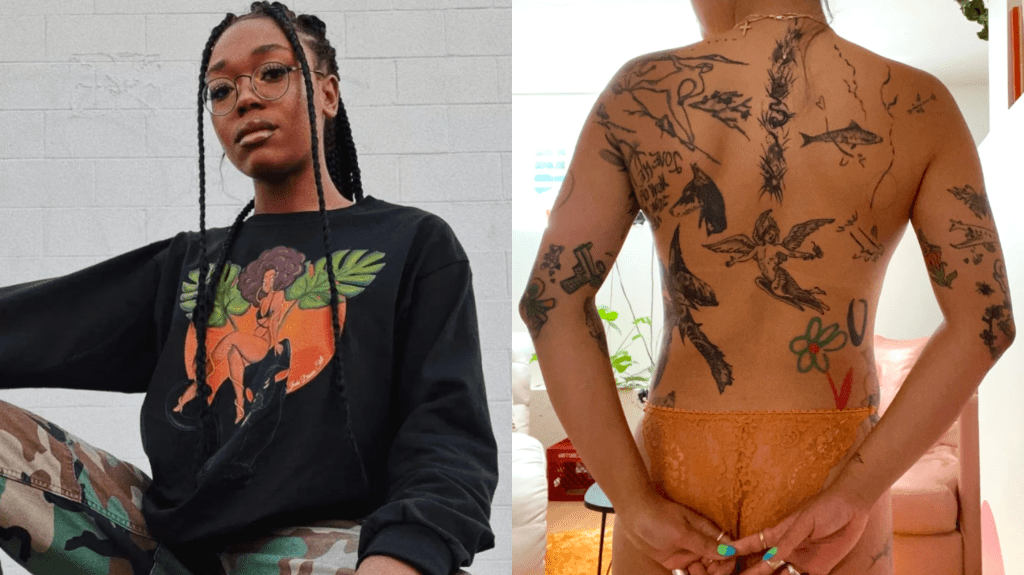
The tattoo artists healing our invisible wounds
“Getting a tattoo has always been an act of reclamation. But now more than ever, we are processing collective trauma through bodily transformation”
“Physical intimacy is a crucial part of restoration after trauma, too, according to Jordan. “Being around other people is one way that we co-regulate, meaning our bodies go back to a sense of groundedness and safety. That’s not something we really do on our own.” For artists who see themselves as healers, this understanding is top of mind”
“In Tamara Santibañez’s unprecedented manifesto/guidebook/love letter Could This Be Magic? Tattooing As Liberation Work, published in March and developed out of discussion groups held during the pandemic, they assert that a tattoo shop has the potential to be an important site of community building and transformation. Historically, that potential is undermined by a masculine culture lacking tenderness. There is a schism between street shops and DIY private studios, between the artists who ask for consent to shave you and artists who snap a photo of your lower back while you’re face-down, unaware.”
 Andy Pollard